 Mimubi














—Not rated in Switzerland (CH)

Overview
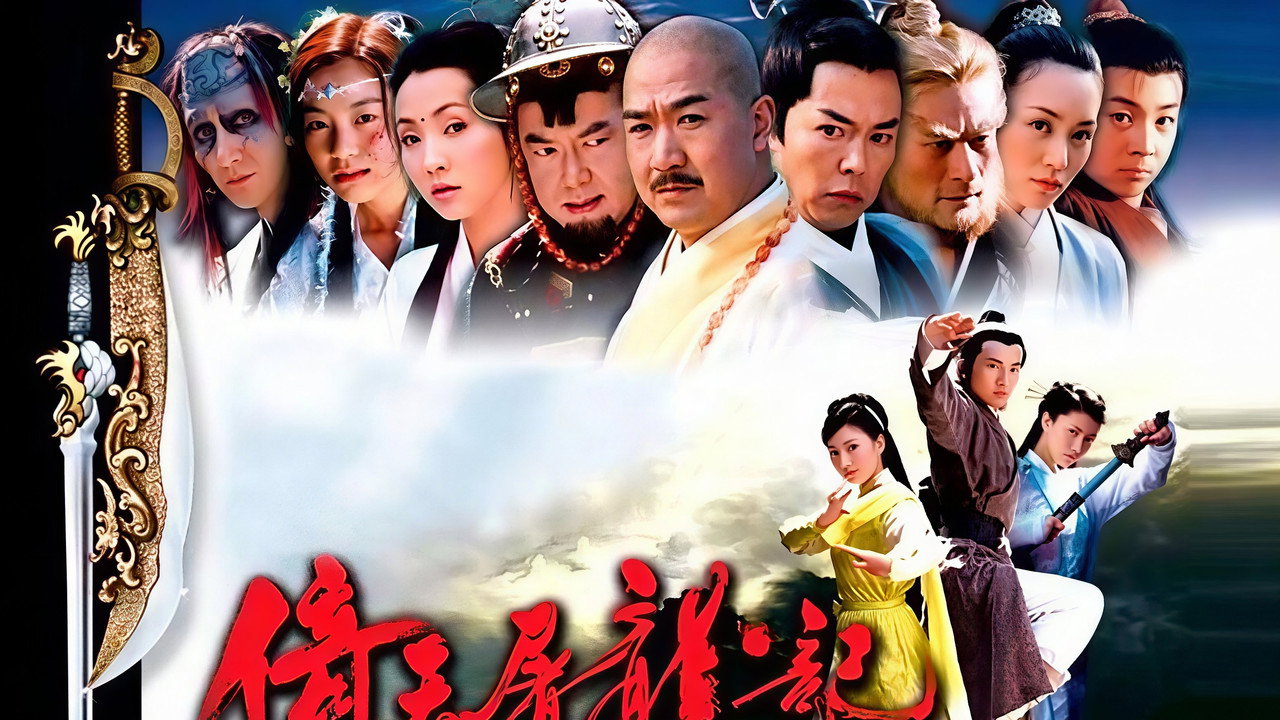
Based on the popular novel by Jin Yong Kam Yung. He also wrote Legend of the Condor Heroes and Return of the Condor Heroes. The Heavenly Sword and Dragon Sabre takes place during 14th Century China during the Mongolian Yuan Dynasty, roughly 100 years after the events of Return of the Condor Heroes. After decades of struggles, famine, and bitterness which the Chinese citizens blamed on the Yuan Dynasty's misgovernment, the Martial Arts sects have begun to rebel. Prince Ruyong asks Cheng Kun, a Shaolin monk with an ulterior motive, for a plan on how to deal with the rebels. "The wielder of Heavenly Sword and/or Dragon Sabre rules the world." This well known legend in the Martial Arts community is the impetus for the tale of Zhang Wuji. The story begins with how his parents met (episodes 1-3), then tells his trials as an adolescent (episodes 4-8), proceeds to relate his rise to prominence (episodes 9-23) and reveals the secret behind Heavenly Sword and Dragon Sabre (episode 23), and ends with the confluence of Wuji's love life, the Martial Arts sects' long standing grudges, and cruel fate.
Cast
30Open an episode for ages at its air date.
- TMDB ID
- 31952 ↗
- First aired
- 2002-12-25
- Last aired
- 2003-04-04
- Status
- Ended
- Genres
- Drama
- Creators
- Unknown
- Countries
- CN
- Languages
- Mandarin
Family guidance
Age ratings
—Not rated in Spain (ES)
—Not rated in France (FR)
—Not rated in United States of America (US)
—Not rated in United Kingdom (GB)
Does the Dog Die?Community yes/no votes · series-wide
Loading community votes…
Kids-In-MindEditorial 0–10 ratings
Kids-In-Mind rates movies, not TV series. This says nothing about the content of this series.
All regional certifications (1)
15South Korea (KR)
This rating is for programs that contain material that may be inappropriate for children under 15, and that parental discretion should be used. Examples include most dramas, and talk shows on OTA (over-the-air) TV (KBS, MBC, SBS), and many American TV shows/dramas on Cable TV channels like OCN and OnStyle. The programs that have this rating may include moderate or strong adult themes, language, sexual inference, and violence. As with the TV-MA rating in North America, this rating is commonly applied to live events where the occurrence of inappropriate dialogue is unpredictable. Since 2007, this rating is the most used rating for TV.
